Explainer
Dyson Airstrait heat and airflow settings
Published
Short answer
The Dyson Airstrait has a wet mode and a dry mode, a choice of heat levels and airflow levels, and a cool option on many units. It also drops to low airflow automatically when no hair is between the arms. The exact temperatures and airflow figures are set by Dyson, so check Dyson's specs for your model rather than relying on numbers quoted elsewhere.
Tools for this job
All 7 picks compared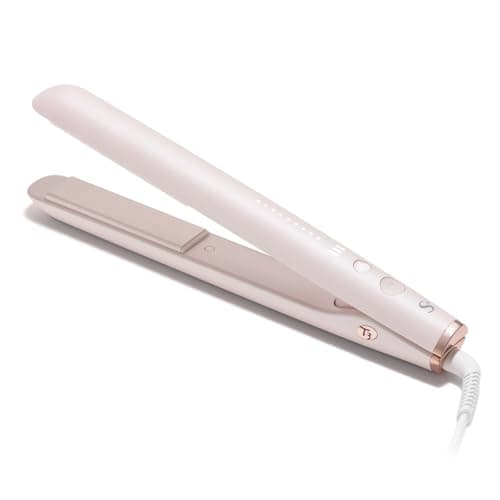
T3 SinglePass StyleMax 1": 9 settings, auto world voltage
See price on AmazonSee it on Amazon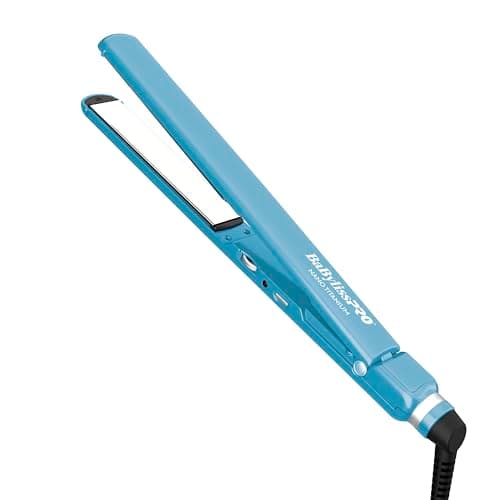
BaBylissPRO Ultra Thin 1": 50 settings up to 450°F
See price on AmazonSee it on Amazon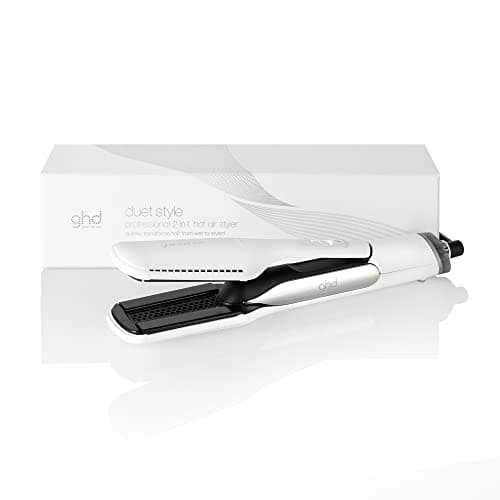
ghd Duet Style: hot air styler with 365°F Shine Shot mode
See price on AmazonSee it on Amazon
People searching for Airstrait temperature usually want two things: the actual heat numbers, and whether the tool causes heat damage. This page explains the modes and controls the Airstrait has and how to choose between them, and points you to Dyson's published specs for exact figures, which can differ by model and region. It also explains why an air straightener's temperature is not directly comparable with a flat iron's plate temperature. It makes no promises about hair health. To learn the routine, see how to use the Dyson Airstrait.
The controls at a glance
The Airstrait's controls fall into a few groups. Dyson's Amazon listing confirms the wet to dry design and the automatic airflow drop when hair is not between the arms. The full list of heat and airflow levels, and their values, is in Dyson's specifications and manual.
Wet mode
- What it does
- Dries and straightens damp hair
- Where to find exact values
- Dyson manual and specs
Dry mode
- What it does
- Smooths already dry hair, touch ups
- Where to find exact values
- Dyson manual and specs
Heat levels
- What it does
- Sets air temperature
- Where to find exact values
- Dyson's published specs
Airflow levels
- What it does
- Sets air speed
- Where to find exact values
- Dyson's published specs
Cool or cold setting
- What it does
- Unheated air, on many units
- Where to find exact values
- Dyson manual for your model
Automatic low airflow
- What it does
- Drops airflow when no hair is between the arms
- Where to find exact values
- Stated on Dyson's listing
| Control | What it does | Where to find exact values |
|---|---|---|
| Wet mode | Dries and straightens damp hair | Dyson manual and specs |
| Dry mode | Smooths already dry hair, touch ups | Dyson manual and specs |
| Heat levels | Sets air temperature | Dyson's published specs |
| Airflow levels | Sets air speed | Dyson's published specs |
| Cool or cold setting | Unheated air, on many units | Dyson manual for your model |
| Automatic low airflow | Drops airflow when no hair is between the arms | Stated on Dyson's listing |
Wet mode vs dry mode
Wet mode is the Airstrait's main purpose. You start with towel dried hair and make slow passes until each section is dry and smooth. Dyson's heat damage claim on its listing carries a footnote limiting it to wet to dry mode, which tells you how Dyson intends the tool to be used most of the time.
Dry mode is for hair that is already dry. It is useful for second day smoothing or tidying the front. Because it works on dry hair, read Dyson's guidance on settings for this mode before using it often. For a full routine with dry hair, some people still reach for a plate iron; Dyson Airstrait vs a flat iron explains the trade offs.
Choosing heat and airflow levels
Without quoting figures, the general approach is the same as with any heat tool: start at a lower heat level and go up only if your hair is not drying or smoothing well. Fine, thin or color treated hair usually needs less heat. Thick or coarse hair may need more heat, more passes and narrower sections.
Airflow works with heat. Higher airflow dries faster but can feel harder to control on fine, flyaway hair. Lower airflow is gentler to work with on shorter or finer hair. Many people find their setting after a few sessions and then keep it.
- 1
Start in wet mode with a lower heat level.
- 2
Use a medium airflow level and sections about as wide as the arms.
- 3
Glide slowly. If a section stays damp after several passes, narrow the section first.
- 4
Raise heat one step only if narrower sections and slower passes do not help.
- 5
Use the cool option, if your unit has one, for a last pass to finish.
Why air temperature is not the same as plate temperature
A flat iron's temperature is the temperature of a metal or ceramic plate pressed against your hair. Typical flat iron guidance runs from about 250°F (121°C) for fine hair to about 450°F (232°C) for coarse hair, and ghd irons run at a fixed 365°F (185°C). An air straightener heats air that moves through the hair, and the hair is wet for much of the process. The numbers are measured differently, so comparing an Airstrait heat figure with a flat iron setting is not like for like.
That is also why Dyson's specs for the Airstrait should be read on their own terms. See the flat iron temperature guide for plate tools and the temperature guide tool for typical ranges.
121°C300°F
149°C350°F
177°C400°F
204°C450°F
232°C
- 330 °F (165 °C): Dyson Corrale
- 365 °F (185 °C): ghd, Dyson Corrale
- 410 °F (210 °C): Dyson Corrale
Does the Airstrait cause heat damage?
Dyson claims no heat damage when the Airstrait is used in wet to dry mode, with that condition stated in its listing's fine print. We do not make hair health promises for any tool. Any heat styling carries some risk, and outcomes depend on your hair, how often you style and the settings you use.
Practical habits still apply: use the lowest settings that work, avoid going over the same section many times, keep the filter clean so the machine runs as designed, and follow Dyson's manual. For a general look at heat and hair, see does a flat iron damage hair.
Note.Keep the arms and air outlet away from your scalp, ears and skin, and follow the safety instructions in Dyson's manual for your model.
Specifications and where to check them
Specs such as weight, cord length, voltage, heat values and airflow values are published by Dyson on its website and in the manual. Dyson sells region specific versions of many products, so make sure you look at the specs for the model and region you own. If you plan to travel, see dual voltage explained. If you are still deciding, is the Dyson Airstrait worth it and the best hair straighteners guide can help.
Frequently asked questions
What temperature does the Dyson Airstrait reach? Dyson publishes the heat values for each model. Check Dyson's specs for your model rather than numbers quoted on other sites.
How many heat settings does the Dyson Airstrait have? It has several heat levels, several airflow levels and wet and dry modes. The exact count and values are in Dyson's specs and manual.
Is the Airstrait cooler than a flat iron? It heats air rather than plates, so the figures are not directly comparable. Dyson's specs give its values; flat irons typically list plate temperatures.
Does the Airstrait have a cool setting? Many units include a cool or cold option for finishing. Check the manual for your model.
What you need for this
- See price on AmazonAmazon
T3 SinglePass StyleMax 1": dedicated Curl Mode
 See price on AmazonAmazon
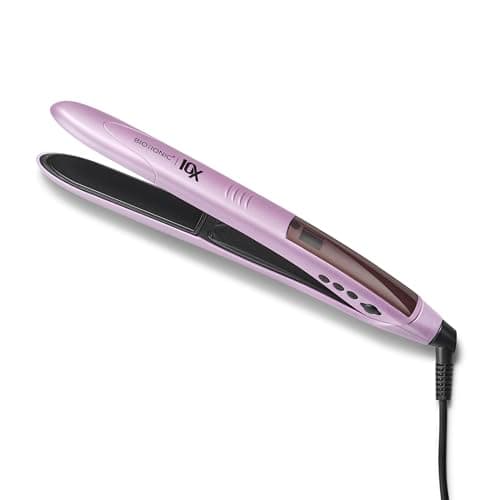
Bio Ionic 10X 1": rounded barrel and sonic plates
From Best flat irons for every hair type, compared by plate and heat