Explainer
How the Dyson Airstrait works
Published
Short answer
The Dyson Airstrait straightens with heated, high-pressure air instead of hot plates. Hair passes between two arms that blow air downward through the section, so it is pulled straight and dried at the same time. Dyson describes it as a wet to dry tool, and it senses when hair is between the arms and drops to low airflow when it is not.
Tools for this job
All 7 picks compared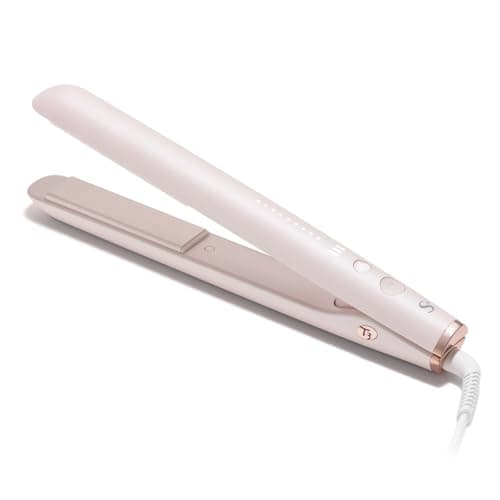
T3 SinglePass StyleMax 1": 9 settings, auto world voltage
See price on AmazonSee it on Amazon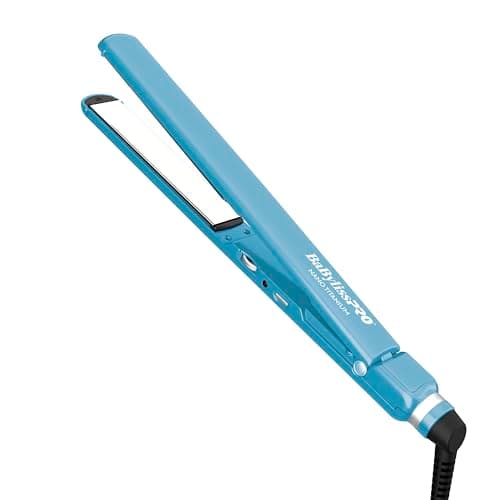
BaBylissPRO Ultra Thin 1": 50 settings up to 450°F
See price on AmazonSee it on Amazon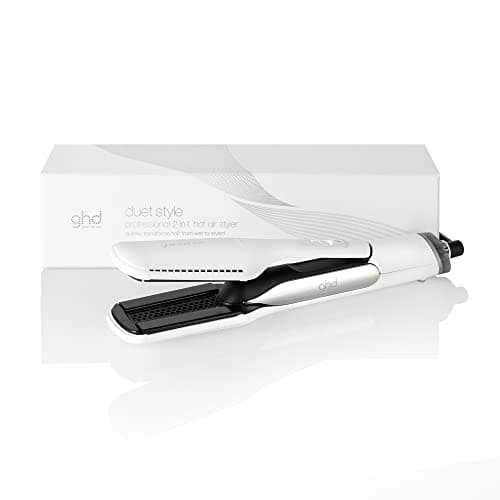
ghd Duet Style: hot air styler with 365°F Shine Shot mode
See price on AmazonSee it on Amazon

This page is for anyone curious about how the Dyson Airstrait straightens hair without plates, or deciding whether it fits their routine. We explain the airflow design, the two arms, how wet to dry styling works, what the hair sensing does, and how the result compares with a flat iron. Facts about the tool come from Dyson's listing; where we describe general styling principles we say so. For step-by-step use, see how to use the Dyson Airstrait.
The core idea: air instead of plates
A flat iron straightens by pressing hair between two hot plates. The Dyson Airstrait has no hot plates. Dyson describes it as using high-pressure airflow to straighten hair as it dries, with the air heated and projected evenly through the section as you style.
This is the same principle as a smooth blow dry, where airflow pointed down the hair shaft stretches the hair while it dries. The Airstrait packs that into a tool shaped like a straightener, so you get the tension and the airflow in one pass without a separate brush.
The two arms and downward airflow
The Airstrait has two arms that close around a section of hair, like the arms of a flat iron. Instead of heated plates, each arm has an air outlet. Air is directed down the length of the hair from both sides at once, so the section is dried and smoothed from the front and the back as you glide down.
Because air flows along the hair rather than across it, it pushes the cuticle in the direction it naturally lies. That is the same reason stylists point a dryer nozzle down the hair shaft during a blowout. The arms do not clamp the hair; they guide it, while the air does the work.
- Two arms close around the section
- Air outlets in both arms, no hot plates
- Airflow directed down the hair shaft
- Section dried and smoothed from both sides
Wet to dry styling
Dyson describes the Airstrait as a tool that takes hair from wet to finished in one step, drying and straightening at the same time. That is the key difference from a flat iron, which is only for dry hair. Dyson's listing notes that its no heat damage claim applies when the tool is used in its wet to dry mode, so the mode you use matters.
Typical use is to towel dry hair, section it, and glide the Airstrait slowly from root to end, repeating until each section is dry. Dense or long hair takes more passes than fine hair. Dyson also offers settings for different temperatures and airflow, and the manual explains which to use on wet or dry hair. Because exact settings vary by version, check the manual for yours.
Note.Follow the manual for which modes to use on wet and dry hair. Keep the arms away from the scalp and let the tool rest in its intended position between sections.
Hair sensing and airflow control
Dyson's listing describes the Airstrait sensing when hair is between the arms and automatically dropping to low airflow when it is not. In practice that means the tool runs quieter and blows less air around while you are sectioning or moving to the next part of your head, then returns to full airflow when you close the arms on hair.
This is a convenience feature rather than a styling one. It makes the tool easier to use at the mirror and saves you switching between speeds.
How the result compares with a flat iron
Air straightening and plate straightening give different finishes. A flat iron presses the hair flat and can give a very sleek, glassy result on dry hair. An air straightener tends to give a smooth, natural straight finish closer to a good blowout, with more movement and less of a pressed look. Very curly or coily hair may need a flat iron pass afterwards for a fully sleek result, which many stylists suggest for silk press styles.
The Airstrait is also bigger and pricier than a typical flat iron, and it needs time to dry hair, so total styling time depends on how long your hair takes to dry. Compare the options in Dyson Airstrait vs flat iron, Dyson Airstrait vs ghd Duet Style and Dyson Corrale vs Airstrait. The ghd Duet Style is another hot air styler; its listing describes drying and straightening at the same time with floating plates and a Shine Shot mode for dry hair at 365 F.
Heating method
- Air straightener (Airstrait)
- Heated airflow
- Flat iron
- Hot plates
Use on wet hair
- Air straightener (Airstrait)
- Yes, wet to dry per Dyson
- Flat iron
- No, dry hair only
Typical finish
- Air straightener (Airstrait)
- Smooth, blowout-like
- Flat iron
- Sleek, pressed
Curls and waves
- Air straightener (Airstrait)
- Not its purpose
- Flat iron
- Many irons can curl
Size
- Air straightener (Airstrait)
- Larger
- Flat iron
- Compact
| Air straightener (Airstrait) | Flat iron | |
|---|---|---|
| Heating method | Heated airflow | Hot plates |
| Use on wet hair | Yes, wet to dry per Dyson | No, dry hair only |
| Typical finish | Smooth, blowout-like | Sleek, pressed |
| Curls and waves | Not its purpose | Many irons can curl |
| Size | Larger | Compact |
Frequently asked questions
Does the Dyson Airstrait have hot plates? No. It straightens with heated, high-pressure airflow from two arms. There are no heated plates.
Can you use the Dyson Airstrait on wet hair? Yes. Dyson describes it as a wet to dry tool that dries and straightens at the same time. Check the manual for which mode to use on wet and dry hair.
Is the Airstrait as sleek as a flat iron? It usually gives a smoother, blowout-like finish rather than a pressed one. People who want a very flat, glassy result often still prefer a flat iron on dry hair.
Why does the Airstrait airflow drop by itself? Dyson says it senses when hair is not between the arms and drops to low airflow. It returns to full airflow when you close the arms on hair.
What you need for this
- See price on AmazonAmazon
T3 SinglePass StyleMax 1": dedicated Curl Mode
 See price on AmazonAmazon
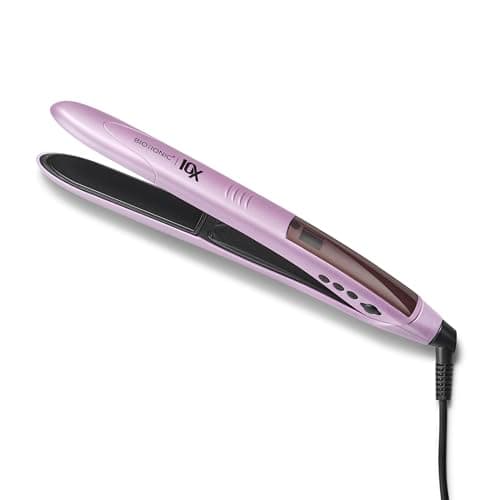
Bio Ionic 10X 1": rounded barrel and sonic plates
From Best flat irons for every hair type, compared by plate and heat
 See price on AmazonAmazon
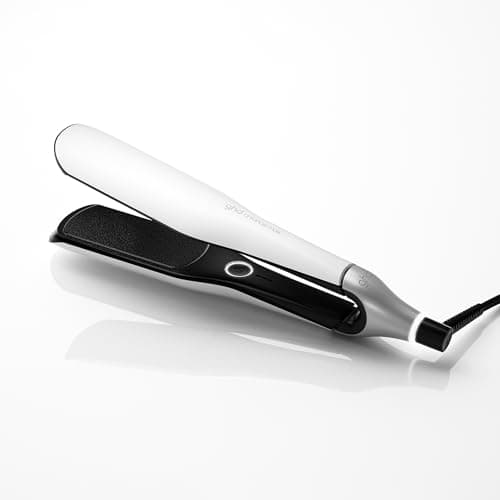
ghd Chronos Max: 2" plates at a fixed 365°F