Comparison
Curling wand vs curling iron: which one to buy
Published
Short answer
A curling iron has a clamp that holds the ends, so it is easier to learn and gives polished, uniform curls. A curling wand has no clamp: you wrap hair around the barrel by hand, which gives looser, more natural curls and avoids clamp creases, but takes a little practice and needs a heat glove. Beginners often start with an iron; wavy, lived-in looks favor a wand.
ghd
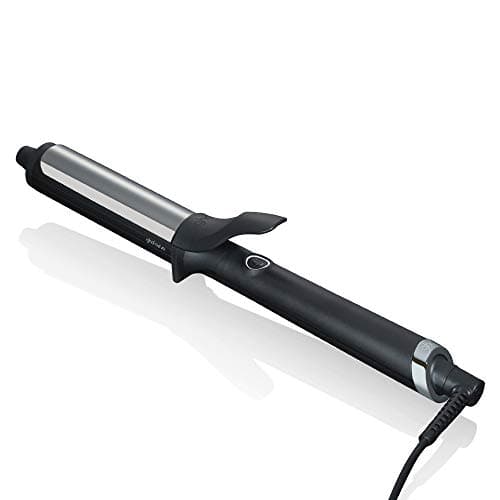
ghd Curve Soft Curl 1.25": spring clamp, 365°F
See price on Amazon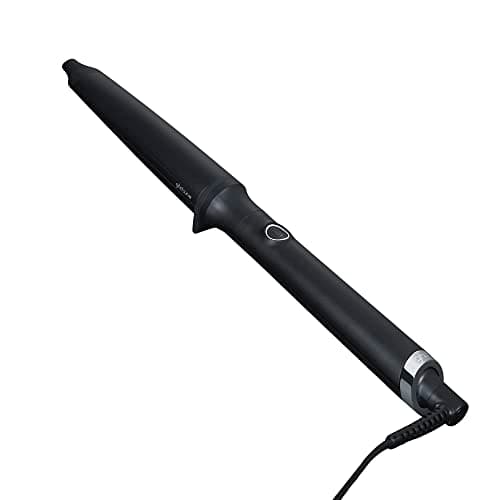
ghd
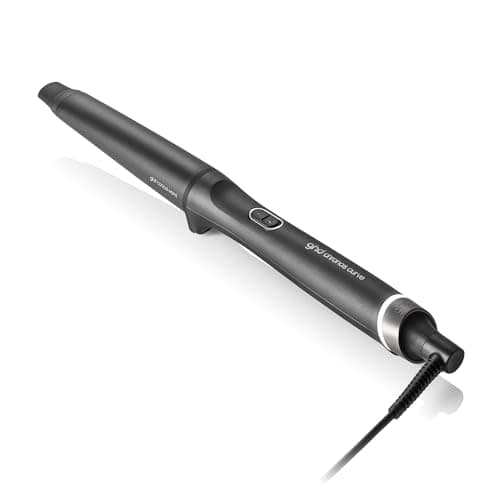
ghd Curve Creative Curl: 0.9-1" tapered wand
See price on Amazon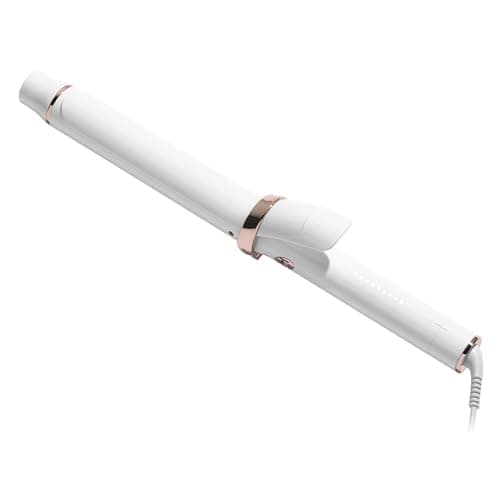
T3
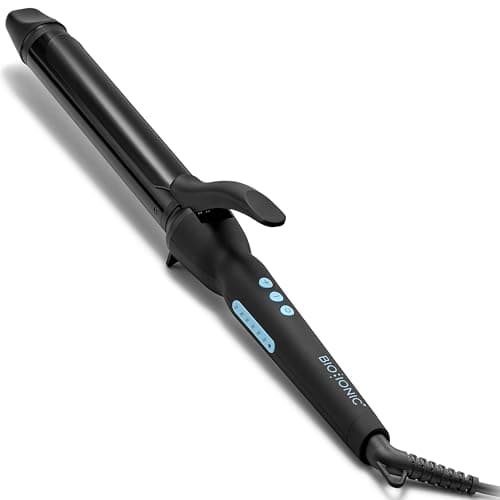
T3 SinglePass Curl X 1.25": extra-long barrel, 9 settings
See price on Amazon
- ghd Curve Soft Curl 1.25": spring clamp, 365°F
- Barrel size
- 1.25 in
- Barrel build
- Ceramic, spring clamp
- Max temperature
- 365°F fixed
- Heat settings
- 1 preset
- ghd Curve Creative Curl: 0.9-1" tapered wand
- Barrel size
- 0.9-1 in.
- Barrel build
- -
- Max temperature
- -
- Heat settings
- -
- T3 SinglePass Curl X 1.25": extra-long barrel, 9 settings
- Barrel size
- 1.25 in, extra-long
- Barrel build
- CeraGloss ceramic, ProGlide clip
- Max temperature
- Not stated
- Heat settings
- 9
| Pick | Barrel size | Barrel build | Max temperature | Heat settings | Price | Link |
|---|---|---|---|---|---|---|
| ghd Curve Soft Curl 1.25": spring clamp, 365°F | 1.25 in | Ceramic, spring clamp | 365°F fixed | 1 preset | - | Amazon |
| ghd Curve Creative Curl: 0.9-1" tapered wand | 0.9-1 in. | - | - | - | - | Amazon |
| T3 SinglePass Curl X 1.25": extra-long barrel, 9 settings | 1.25 in, extra-long | CeraGloss ceramic, ProGlide clip | Not stated | 9 | - | Amazon |
Facts are taken from each Amazon listing. Prices are checked daily and shown with their date.
Verdict
Buy a clamp curling iron like the ghd Curve Soft Curl or T3 SinglePass Curl X if you are new to curling or want polished, uniform curls. Buy a wand like the ghd Curve Creative Curl Wand if you want looser, natural-looking curls and are willing to learn the wrap.
Curling iron and curling wand are often used as if they mean the same thing, but they work differently and give different results. This page is for anyone choosing between them. We compare clamp and clipless designs, the curl each makes, the learning curve, and which suits your hair length, with three real ghd and T3 tools from their listings. Our curling iron types explainer covers the other variations, like rotating irons.
The key difference: clamp or no clamp
A curling iron (also called curling tongs) has a spring clamp. You catch the ends of a section, roll the iron up toward the root, hold and release. The clamp does the gripping, so it is easy to control and gives smooth, defined curls that start right at the ends.
A curling wand is a bare barrel. You wrap the section around it by hand, usually starting near the root and leaving the ends loose or wrapped near the tip. With no clamp there are no crease marks, and curls tend to look softer and more natural. Wands usually come with a heat-resistant glove or cool tip.
Three tools compared from the listings
One ghd clamp iron, one ghd tapered wand and one T3 clamp iron, with facts from each Amazon listing.
Type
- ghd Curve Soft Curl Iron
- Clamp iron
- ghd Curve Creative Curl Wand
- Clipless wand, tapered
- T3 SinglePass Curl X 1.25"
- Clamp iron, extra-long barrel
Barrel
- ghd Curve Soft Curl Iron
- 1.25" ceramic
- ghd Curve Creative Curl Wand
- About 0.9 to 1.1" tapered
- T3 SinglePass Curl X 1.25"
- 1.25" CeraGloss ceramic
Heat
- ghd Curve Soft Curl Iron
- 365F
- ghd Curve Creative Curl Wand
- 365F
- T3 SinglePass Curl X 1.25"
- 9 settings
Heat-up
- ghd Curve Soft Curl Iron
- 25 seconds
- ghd Curve Creative Curl Wand
- 25 seconds
- T3 SinglePass Curl X 1.25"
- Not stated
Safety
- ghd Curve Soft Curl Iron
- Cool tip, stand, 30 min sleep
- ghd Curve Creative Curl Wand
- Cool tip, stand, 30 min sleep
- T3 SinglePass Curl X 1.25"
- Not stated in listing
Listed price
- ghd Curve Soft Curl Iron
- $166.99
- ghd Curve Creative Curl Wand
- $203.00
- T3 SinglePass Curl X 1.25"
- $159.99
| Feature | ghd Curve Soft Curl Iron | ghd Curve Creative Curl Wand | T3 SinglePass Curl X 1.25" |
|---|---|---|---|
| Type | Clamp iron | Clipless wand, tapered | Clamp iron, extra-long barrel |
| Barrel | 1.25" ceramic | About 0.9 to 1.1" tapered | 1.25" CeraGloss ceramic |
| Heat | 365F | 365F | 9 settings |
| Heat-up | 25 seconds | 25 seconds | Not stated |
| Safety | Cool tip, stand, 30 min sleep | Cool tip, stand, 30 min sleep | Not stated in listing |
| Listed price | $166.99 | $203.00 | $159.99 |
Curl shape and finish
Irons give curls that are smooth and uniform from the ends upward. The T3 listing says its ProGlide clip grips without creasing, which addresses the classic downside of clamps. ghd describes the Curve Soft Curl as making soft waves and voluminous curls with its 1.25 inch barrel.
Wands give looser, more varied curls. A tapered wand like the ghd Creative Curl makes curls looser at the root and tighter at the ends. That is why wands are popular for beach waves and lived-in texture. See our tapered vs straight barrel wand comparison and beach waves picks.
Learning curve
Most beginners find a clamp iron easier. The clamp holds the hair for you, and you can see exactly where the curl starts. Our how to use a curling iron guide walks through the method.
A wand takes a few sessions to learn because you control the wrap by hand and must keep fingers away from the barrel. Once learned, many people find it faster. Follow how to use a curling wand and always use the glove.
Note.Wand barrels are hot along their full length and have no clamp to hold hair away from your fingers. Wear the heat glove and keep the barrel away from skin.
Which suits your hair length
Barrel size matters as much as tool type. Our curling iron size guide shows which size makes which curl.
- Short hair: a small clamp iron is easier to grip short ends. See curling irons for short hair.
- Shoulder length: either works; a 1 to 1.25 inch size is a common choice.
- Long hair: wands and long-barrel irons both work. See long barrel curling irons.
- Fine hair that drops curls: an iron with lower heat options and a smaller barrel can help. See hair won't hold a curl.
Heat settings and safety features
The two ghd tools both hold 365F, so there is nothing to set. Both list a 25 second heat-up, a cool tip, a built-in safety stand and automatic sleep after 30 minutes. The Curve Soft Curl also lists universal voltage and a 2-year warranty.
The T3 Curl X gives you 9 heat settings. That lets you drop the heat for fine or color-treated hair or raise it for thick hair. Its listing does not state heat-up time, sleep mode or voltage, so check T3's documentation if those matter. Our curling iron temperature guide gives typical starting points by hair type.
Keep any barrel clean so heat transfers evenly. Product buildup can make hair drag or stick. Our how to clean a curling iron guide covers safe cleaning for clamp irons and wands alike.
Frequently asked questions
Is a curling wand or curling iron better for beginners? A clamp curling iron is usually easier to learn because the clamp holds the hair for you.
Do curling wands make curls last longer? Not by design. Hold depends on heat, section size, cooling and product. See our curls falling out fix.
What is the difference between curling tongs and a curling iron? They are the same tool: a heated barrel with a clamp. Tongs is the more common term outside the US.
Can a wand make tight curls? Yes, with a small barrel. Tightness comes from barrel size more than from whether there is a clamp.