Fix
Hair won't curl with a curling iron
Published
Short answer
The usual reasons are a barrel too big for your hair length, sections too thick for the heat to reach through, heat too low or held too briefly, and touching curls before they cool. Fix them in that order: try a smaller barrel, thinner sections, a slightly longer hold or higher setting within the typical range, and let each curl cool fully.
Tools for this job
All 7 picks compared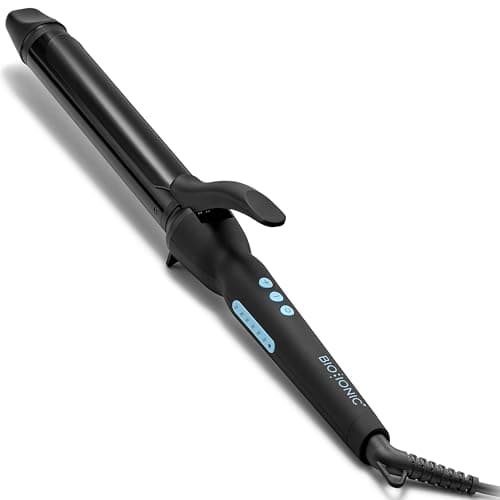
Bio Ionic Long Barrel 1.25": 2" longer barrel, 430°F
See price on AmazonSee it on Amazon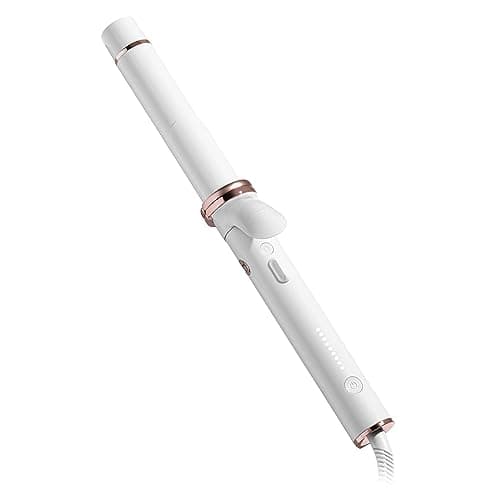
T3 CurlWrap 1.25": auto-rotating barrel, 2 timers
See price on AmazonSee it on Amazon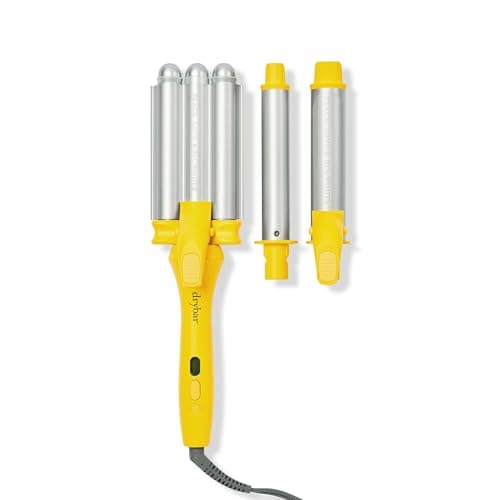
Drybar The Mixologist: iron, wand and waver, up to 450°F
See price on AmazonSee it on Amazon
This page is for anyone whose hair will not take a curl, or whose curls drop within an hour. It covers curling irons, clipless wands and flat irons used for curling. We go through the causes in the order that usually solves them fastest, from barrel size and section thickness to heat, product, hair condition and cooling. We also explain when the tool itself may be the problem. Temperatures are given as typical ranges from tool makers, not fixed rules.
Fixes in order
Start at the top. Each step is cheap and quick, and the first few fix most cases.
- 1
Check the barrel size against your hair length.
- 2
Use thinner sections, about 1 inch.
- 3
Hold each section a little longer, or raise the heat one step within the typical range.
- 4
Make sure hair is completely dry and not coated in heavy product.
- 5
Let every curl cool fully before touching it. Pin it up if your hair is very heavy.
- 6
Finish with a light hold spray once cool.
- 7
If none of this helps, check whether the tool is heating properly.
Barrel too big for your hair
Hair needs to wrap around a barrel about two times or more to hold a shape. On short hair, a 1 1/2 inch barrel gives barely one wrap, so the result is a bend that drops quickly. Long, heavy hair on a big barrel can also lose shape as the weight pulls it down.
For chin length hair, 1/2 to 1 inch barrels usually work best. For shoulder length, up to 1 1/4 inches. Long hair can go bigger, but a smaller barrel holds better on hair that resists curling. Use the barrel size picker or read the curling iron size guide.
- 3/8 in10 mmRinglets
- 1/2 in13 mmTight
- 3/4 in19 mmTight
- 1 in25 mmClassic
- 1 1/4 in32 mmLoose
- 1 1/2 in38 mmWaves
- 2 in51 mmVolume
Sections too thick, heat too low
If a section is too thick, the outside layers touch the barrel but the inner hair barely warms, so the curl does not set all the way through. Thinner sections fix this more reliably than turning up the heat.
If your tool has a dial, check it is within the typical range for your hair. Tool makers commonly publish about 250 to 300 F (121 to 149 C) for fine, thin or damaged hair, 300 to 380 F (149 to 193 C) for normal hair, and 380 to 450 F (193 to 232 C) for thick or coarse hair. Start low and go up one step only if curls still drop. Fixed-temperature tools such as ghd Curve wands run at 365 F (185 C), so adjust section size and hold time instead. See the curling iron temperature guide.
Barrel too big
- Sign
- Soft bend that drops fast
- Fix
- Smaller barrel
Sections too thick
- Sign
- Outside curled, inside straight
- Fix
- 1 inch sections
Heat or hold too low
- Sign
- Curl looks fine but falls in an hour
- Fix
- Hold longer or one step hotter
Hair not fully dry
- Sign
- Frizz, curl collapses
- Fix
- Dry completely first
Heavy product or oils
- Sign
- Limp, slippery hair
- Fix
- Wash, use light product
Touched while warm
- Sign
- Curl stretches out immediately
- Fix
- Let cool or pin up
| Cause | Sign | Fix |
|---|---|---|
| Barrel too big | Soft bend that drops fast | Smaller barrel |
| Sections too thick | Outside curled, inside straight | 1 inch sections |
| Heat or hold too low | Curl looks fine but falls in an hour | Hold longer or one step hotter |
| Hair not fully dry | Frizz, curl collapses | Dry completely first |
| Heavy product or oils | Limp, slippery hair | Wash, use light product |
| Touched while warm | Curl stretches out immediately | Let cool or pin up |
Product, hair condition and cooling
Very clean, silky hair can be slippery, and hair weighed down by oils or heavy conditioner can be limp. Many people find second-day hair or a light texture spray gives more grip. Apply styling products before curling only if the label says they are meant for use with heat, and let them dry first.
Hair sets its shape as it cools, so how you handle it in the first minutes matters a lot. Release each curl into your palm and let it drop without stretching. For heavy hair, pin each curl in a loop with a clip until it cools. Brush or finger-comb only once everything is cool.
Hair that has been chemically straightened or treated can resist curling. A stylist can advise on what your hair will hold.
Technique differences by tool
With a clamp iron, avoid clamping the ends tightly and rolling too fast; hold the roll still for a few seconds. With a wand, wrap the hair flat rather than twisted into a rope, and keep the hand wearing the glove holding the ends. With a flat iron, glide slowly; a fast glide makes a loose wave. See how to use a curling iron, how to use a curling wand and how to curl hair with a flat iron.
If curls are fine at first but fall out later in the day, read curls falling out.
When the tool is the problem
If the barrel feels cooler than it used to, heats unevenly, or shows a fault light, the tool may not be reaching temperature. Check the setting has not been turned down, then see T3 curling iron stopped working or the general flat iron not heating up checklist. If you are replacing it, pick the barrel by length and look, as covered in our best curling irons, curling irons for fine hair and curling irons for thick hair guides.
Frequently asked questions
Why won't my hair curl with a curling iron? Most often the barrel is too big, sections are too thick, or the curls are touched before they cool. Try a smaller barrel and 1 inch sections, and let each curl set.
Should I turn up the heat if my hair won't curl? Try thinner sections and a slightly longer hold first. If you raise the heat, go one step at a time and stay within the typical range for your hair type.
Does fine hair hold curls worse than thick hair? Fine hair can drop faster because it is light and slippery, while thick hair may not heat through. Both respond well to thinner sections and full cooling.
Does hairspray help curls hold? A light hold spray applied after curls cool helps many people. Some also use a texture spray before curling for grip.
What you need for this
- See price on AmazonAmazon
Bio Ionic Long Barrel 1.25": 2" longer barrel, 430°F
 See price on AmazonAmazon
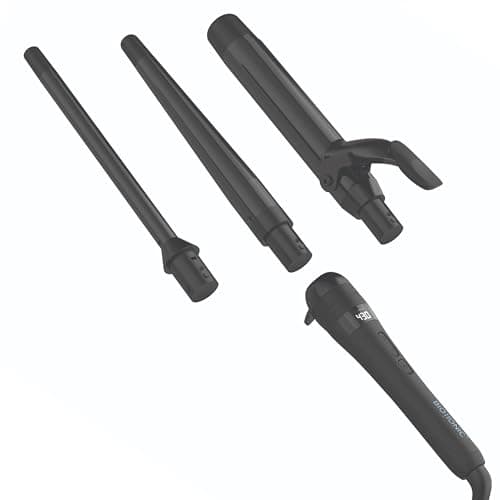
Bio Ionic Twist: 0.5" wand and 1" tapered in one set
From Best curling irons for fine hair, by lowest heat setting
 See price on AmazonAmazon
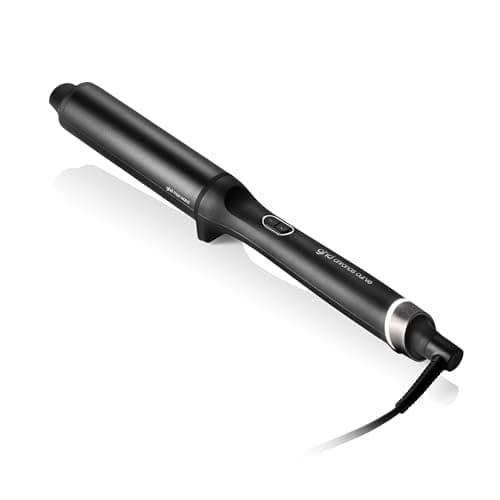
ghd Chronos Curve Max Wand: 1.5" for loose waves