How-to
How to curl and wave hair with a flat iron
Published
Short answer
Clamp a 1 to 2 inch section near the root, turn the flat iron a half turn away from your face, and glide it slowly down to the ends without stopping. For flat, undone waves, bend the section back and forth with the plates instead of twisting. Let every curl cool before you touch it.
Tools for this job
All 7 picks compared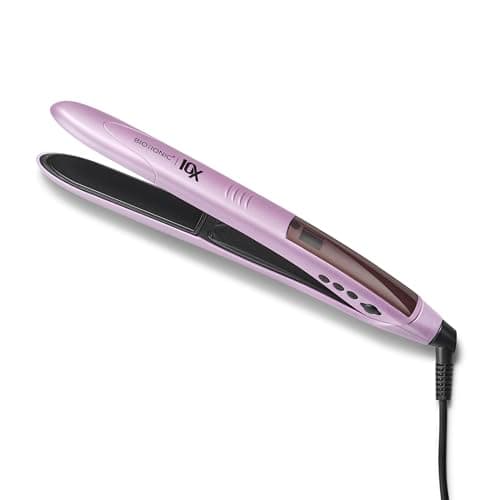
Bio Ionic 10X 1": rounded barrel and sonic plates
See price on AmazonSee it on Amazon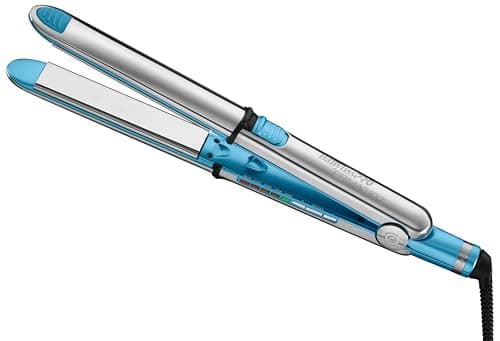
BaBylissPRO Prima3100 1": heated outer housing, 465°F
See price on AmazonSee it on Amazon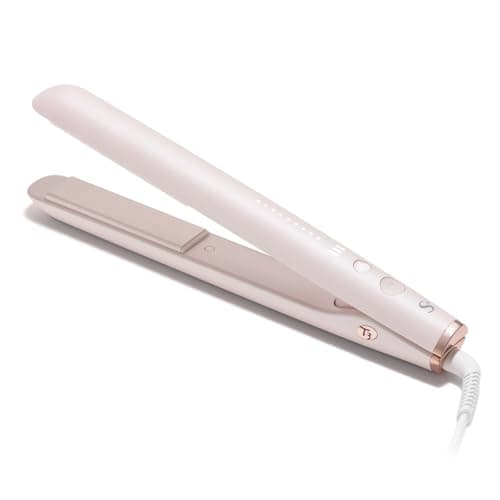
T3 SinglePass StyleMax 1": dedicated Curl Mode
See price on AmazonSee it on Amazon
This guide is for anyone who owns a flat iron and wants curls or waves without buying a second tool. It covers the classic twist-and-glide curl, the flat wave method that gives a lived-in bend, how big to make each section, what heat range to start at, and the mistakes that cause dents, frizz or curls that drop by lunch. It works with most 1 inch irons, including fixed-temperature stylers such as the ghd Platinum+ and Chronos, which ghd lists at 365 F (185 C). Irons with rounded outer housing make the glide smoother, so we point out which features help.
What you need before you start
A flat iron with plates about 1 inch wide is the easiest size for curling. Wider plates, like 1.5 or 2 inch, are made for straightening long or thick hair and are harder to turn close to the head. Narrow plates, such as the ghd Mini at 0.5 inch, suit short hair and tight bends. Rounded or curved outer edges help hair slide around the iron without leaving a crease, which is why some makers describe their stylers as built for curls and waves as well as straightening.
Start with clean, completely dry hair. Plate tools are meant for dry hair only, and most manuals say so. Brush out knots, apply a heat protectant if you use one, and have a few sectioning clips ready. A heat-resistant glove is optional but makes it easier to guide the ends.
- Flat iron, ideally 1 inch with rounded edges
- Sectioning clips
- Heat protectant (optional, per your routine)
- Wide-tooth comb or brush
- Light hold hairspray for after the curls cool
Pick a starting temperature
If your iron has a dial, start at the low end of the typical range for your hair type and go up only if the curl does not hold. Tool makers commonly publish ranges like these: fine, thin, damaged or color-treated hair around 250 to 300 F (121 to 149 C); normal hair around 300 to 380 F (149 to 193 C); thick or coarse hair around 380 to 450 F (193 to 232 C). These are typical guidance, not rules, so check your own manual.
Fixed-temperature irons skip this step. ghd stylers run at one setting of 365 F (185 C), so on those you control the result with section size and glide speed instead of the dial. Our temperature guide by hair type gives a quick range for your hair.
121°C300°F
149°C350°F
177°C400°F
204°C450°F
232°C
- 330 °F (165 °C): Dyson Corrale
- 365 °F (185 °C): ghd, Dyson Corrale
- 410 °F (210 °C): Dyson Corrale
The twist-and-glide method for curls
This is the method most people mean when they say curling with a straightener. The speed of the glide sets the tightness: slow gives a tighter, more defined curl, faster gives a softer bend. Practice with the iron turned off first so you get used to the motion.
1Clamp near the root
Take a 1 inch section and close the iron on it a few inches from the scalp.
2Half turn away from the face
Rotate the iron 180 degrees so the hair wraps over the top plate.
3Glide down slowly
Keep the turn and slide the iron to the ends at an even, slow pace.
- 1
Divide hair into a bottom layer and clip the rest up out of the way.
- 2
Take a section about 1 inch wide. Thinner sections give tighter curls.
- 3
Clamp the section a few inches from the root with the iron held horizontally.
- 4
Turn the iron a half turn (180 degrees) away from your face so the hair wraps over the top plate.
- 5
Keep the iron turned and glide it slowly and steadily down to the ends. Do not stop or the curl will kink.
- 6
Release the curl into your hand or let it drop, and leave it alone to cool.
- 7
Repeat around the head, turning away from the face on both sides, then work up layer by layer.
Note.Keep the hot plates away from your scalp, ears and neck, and set the iron on a heat-safe surface or its stand between sections.
The flat wave method for undone waves
Flat waves look like a loose S bend rather than a round curl. They are popular for beach texture and work well on shoulder length hair. Instead of rotating the iron, you bend the hair around it in alternating directions.
Clamp a section near the top, then bend the hair down and around the front of the iron with your free hand, clamp just below that bend, and bend the hair the other way around the back. Move down the section in steps about the width of the plates. Leave the last inch or two of the ends straight for a modern finish. Shake the waves out with your fingers once they cool.
Common mistakes and quick fixes
Most problems come from stopping the iron, using sections that are too thick, or touching the curls while they are still warm. Hair sets its shape as it cools, so brushing hot curls usually flattens them.
Dent or line in the curl
- Likely cause
- Iron paused or clamped too hard
- Fix
- Keep moving and use a lighter grip
Curl falls out fast
- Likely cause
- Section too thick or iron moved too fast
- Fix
- Smaller sections, slower glide, let cool
Frizzy result
- Likely cause
- Hair not fully dry or uneven pass
- Fix
- Dry completely first, one smooth pass
Ends are straight but you wanted curls
- Likely cause
- Released the twist before the ends
- Fix
- Hold the half turn all the way down
Hair snags
- Likely cause
- Plates sticky with product
- Fix
- Clean plates when cool, per the manual
| Problem | Likely cause | Fix |
|---|---|---|
| Dent or line in the curl | Iron paused or clamped too hard | Keep moving and use a lighter grip |
| Curl falls out fast | Section too thick or iron moved too fast | Smaller sections, slower glide, let cool |
| Frizzy result | Hair not fully dry or uneven pass | Dry completely first, one smooth pass |
| Ends are straight but you wanted curls | Released the twist before the ends | Hold the half turn all the way down |
| Hair snags | Plates sticky with product | Clean plates when cool, per the manual |
Making the style last
Let all curls cool fully before you touch them. Then run your fingers through to separate them, or use a wide-tooth comb for softer waves. A light mist of hairspray from a distance helps hold on hair that drops easily. If you want curls more than waves most days, a dedicated curling iron or wand may be quicker. See flat iron vs curling iron for the trade-offs, and the curling iron size guide if you are thinking of adding one.
For straight styles with the same iron, read how to use a flat iron. If you want an iron chosen with curling in mind, look at our ghd flat iron guide or the full list of best flat irons.
Frequently asked questions
Can you curl hair with any flat iron? Most flat irons can make some kind of bend, but irons with plates about 1 inch wide and rounded outer housing are much easier to turn and glide. Very wide or square-edged irons tend to leave creases.
How do you curl hair with a ghd? Use the same twist-and-glide method. Because ghd stylers run at a fixed 365 F (185 C), you adjust the result with section size and speed: a slower glide on a thinner section gives a tighter curl.
Why does my flat iron leave a line in my hair? A line usually means the iron paused or was clamped too tightly. Keep a steady glide, ease your grip, and make sure the hair wraps fully around the plate before you start moving.
Should I curl hair away from or toward my face? Turning the iron away from the face on both sides is the most common choice because it opens the face. Alternating directions gives a more undone, beachy look.
What you need for this
- See price on AmazonAmazon
Bio Ionic 10X 1": rounded barrel and sonic plates
 See price on AmazonAmazon
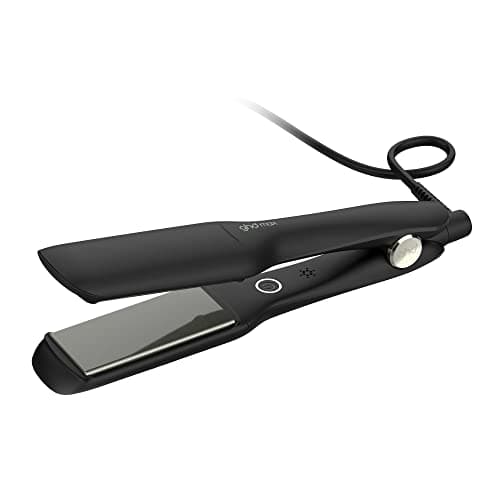
ghd Max 2": wide plates at a lower price than Chronos Max
From Best ghd flat irons: Platinum+, Chronos, Gold, Max and more