How-to
How to use a flat iron correctly, step by step
Published
Short answer
Start with fully dry, detangled hair and a heat protectant, set the iron to the low end of the typical range for your hair type, and work in small sections. Clamp near the root, add light tension with a comb or your free hand, and glide down in one slow, steady pass instead of several fast ones.
Tools for this job
All 7 picks compared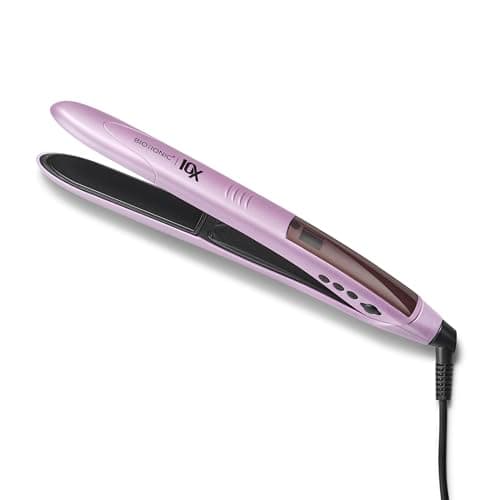
Bio Ionic 10X 1": sonic vibrating plates up to 450°F
See price on AmazonSee it on Amazon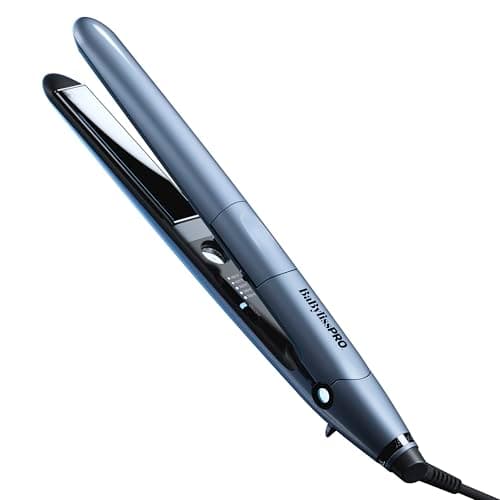
BaBylissPRO TrueTension 1": 465°F, 120V/240V
See price on AmazonSee it on Amazon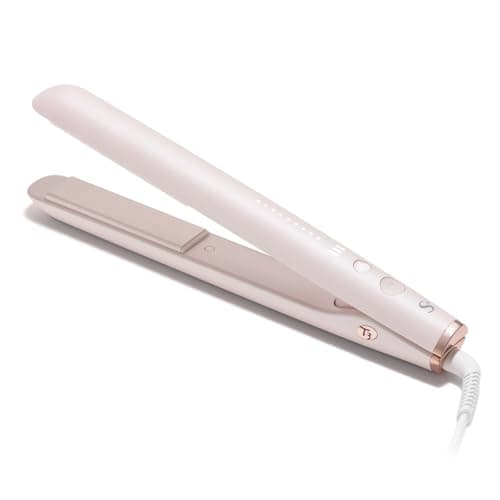
T3 SinglePass StyleMax 1": 9 settings and Curl Mode
See price on AmazonSee it on Amazon
This guide is for anyone who owns a flat iron and wants a smoother, longer lasting result with fewer passes. It covers what to do before the iron touches your hair, how to pick a temperature, how big each section should be, the pass itself, and how to finish. It also covers the mistakes that make hair frizzy, creased or flat at the crown. If you are still choosing a tool, our flat iron guide compares plate widths and heat controls, and the temperature tool gives a starting heat for your hair type.
What you need before you start
You need a flat iron, a wide tooth comb, a fine tooth comb or paddle brush, a few sectioning clips and a heat protectant made for hot tools. A heat-resistant mat or the iron's stand keeps the hot plates off your counter. If your iron came with a plate guard, keep it nearby so you can cap the iron when you finish.
Plate width matters more than most people expect. A 1 inch plate is the most flexible size: it reaches the roots, handles bangs and can bend the ends or curl. Wider 1.5 to 2 inch plates move faster through long or thick hair. Narrow plates around 0.5 inch suit very short cuts, edges and beards. The flat iron size guide goes deeper on picking a width.
- Flat iron with a stand or heat mat
- Heat protectant spray or cream
- Wide tooth comb plus a fine tooth comb or paddle brush
- Four to six sectioning clips
- A mirror you can see the back of your head in, or a hand mirror
Prep: start with dry, detangled hair
Plate irons are designed for dry hair. Most makers tell you not to use them on wet or damp hair, because the water turns to steam between the plates and the result is usually frizz rather than sleekness. Blow dry first, or let hair dry fully. If you want to straighten from wet, that is a different kind of tool; see can you flat iron wet hair.
Detangle with a wide tooth comb so the iron glides without snagging. Apply heat protectant evenly, especially on the mid lengths and ends, and let it dry before you start. A wet spray on the plates sizzles and leaves residue behind, which builds up over time.
Set the right temperature for your hair
Makers publish typical ranges by hair type. Fine, thin, damaged or color-treated hair usually sits around 250 to 300°F (121 to 149°C). Normal or medium hair often uses 300 to 380°F (149 to 193°C). Thick or coarse hair may need 380 to 450°F (193 to 232°C). Start at the low end of your range and go up only if the section does not stay smooth.
Some irons do not have a dial at all. ghd stylers such as the Platinum+ and Gold run at one fixed 365°F (185°C). The Dyson Corrale offers three settings of 330, 365 and 410°F (165, 185 and 210°C). Many professional irons, such as the BaBylissPRO Nano Titanium models, go up to 450°F. Always check the manual for your specific iron.
Fine, thin, damaged or color-treated
- Typical range (°F)
- 250 to 300
- Typical range (°C)
- 121 to 149
Normal or medium
- Typical range (°F)
- 300 to 380
- Typical range (°C)
- 149 to 193
Thick or coarse
- Typical range (°F)
- 380 to 450
- Typical range (°C)
- 193 to 232
| Hair type | Typical range (°F) | Typical range (°C) |
|---|---|---|
| Fine, thin, damaged or color-treated | 250 to 300 | 121 to 149 |
| Normal or medium | 300 to 380 | 149 to 193 |
| Thick or coarse | 380 to 450 | 193 to 232 |
Step by step: how to flat iron your hair
The single biggest change most beginners can make is to slow down. One slow, controlled pass with tension usually does more than three fast passes. Fast passes do not give the hair enough contact time, so you end up going over the same section again and again.
- 1
Divide hair into four sections (two in front, two in back) and clip them up. Very thick hair may need six or eight.
- 2
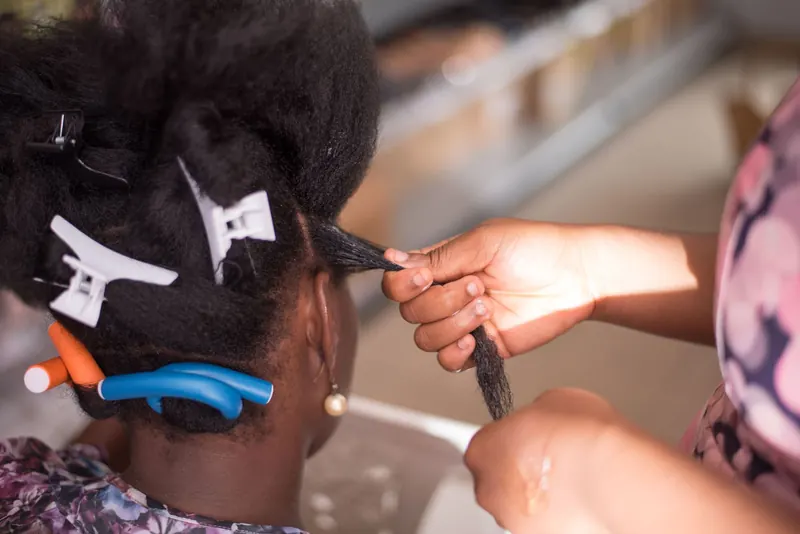
Release a 1 inch wide sub-section from the bottom layer at the back. It should be no wider than your plates and thin enough that you can see the plates through it when clamped.
- 3
Comb the sub-section smooth and hold the ends taut with your free hand or a fine tooth comb just ahead of the iron.
- 4
Clamp the iron close to the root without touching the scalp. Keep the plates level.
- 5
Glide down to the ends in one steady motion. A slow, even count of about three to five seconds for shoulder length hair is a common starting point.
- 6
Let the section cool before you touch it. Move to the next sub-section and repeat, working up the head and then forward.
- 7
Do the crown and front last, so the top layer lies smoothly over the rest.
Technique details that change the result
Comb chase method. Run a fine tooth comb down the section a half inch ahead of the iron. The comb aligns the strands and adds tension, so the plates see an even, flat ribbon of hair. Many stylists use this on curly or coarse textures.
Root angle. Pulling the section straight up from the scalp before you clamp gives lift at the roots. Pulling it down flat against the head gives a sleeker, flatter look. Choose based on the finish you want.
Ends. For a soft bend, turn your wrist slightly under as you reach the last inch. For blunt, poker straight ends, keep the iron level all the way off the hair.
Do not stop mid-shaft. Pausing in one spot leaves a crease. If you need to stop, open the plates first.
Common mistakes to avoid
Most flat iron problems come from a small group of habits. If your hair puffs back up within an hour, see hair won't stay straight. If it smells burnt, read hair smells burnt after a flat iron.
- Ironing damp hair or hair with wet product still on it
- Using sections wider or thicker than the plates
- Many fast passes instead of one slow one
- Starting at maximum heat by default
- Letting buildup collect on the plates (see how to clean a flat iron)
- Touching or brushing hair while it is still hot
Note.Plates can reach several hundred degrees. Keep them away from skin, ears and the scalp, set the iron on its stand, unplug it after use and let it cool before storing.
Finishing and making the style last
Let your hair cool completely before you brush or style it. Hair sets as it cools, so handling it while warm can undo the straightness. A light serum or anti-humidity spray on the lengths can help in damp weather. Sleeping on a smooth pillowcase and wrapping or loosely tying hair can help the look carry into the next day.
If you want to use your iron for waves too, a rounded-housing iron makes that easier. See how to curl hair with a flat iron and our flat irons that also curl.
Frequently asked questions
How many passes should a flat iron take? Ideally one slow pass per small section. If a section needs more than two passes, the section is probably too thick, the hair may not be fully dry, or the temperature may be too low for your texture.
Should I flat iron hair every day? Many stylists suggest limiting daily heat. Refreshing only the front pieces or the ends between full styling days reduces total heat exposure. Use the lowest setting that works and a heat protectant each time.
Why does my flat iron pull my hair? Pulling usually comes from tangles, sections that are too large, or residue on the plates. Detangle first, use smaller sections and wipe the cooled plates clean.
What plate width is best for beginners? A 1 inch plate is the most common starting point because it handles most lengths and can reach the roots. Long, thick hair often goes faster with wider plates. Our flat iron guide covers both.
What you need for this
- See price on AmazonAmazon
Bio Ionic 10X 1": rounded barrel and sonic plates
From Best flat irons for every hair type, compared by plate and heat
- See price on AmazonAmazon
T3 SinglePass StyleMax 1": dedicated Curl Mode
 See price on AmazonAmazon
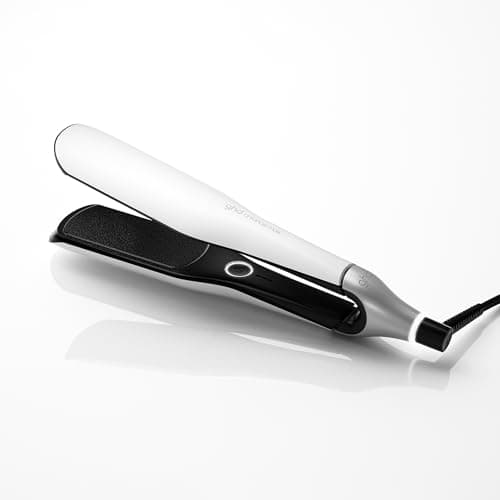
ghd Chronos Max: 2" plates at a fixed 365°F