How-to
How to flat iron short hair, pixies and bobs
Published
Short answer
Use a narrow plate, around 1/2 to 1 inch, and small sections. Lift each section up from the scalp before you clamp so the crown keeps volume, glide out quickly, and turn your wrist slightly at the ends so they bend instead of sticking out. Start at a low temperature, since short sections heat up fast.
Tools for this job
All 6 picks compared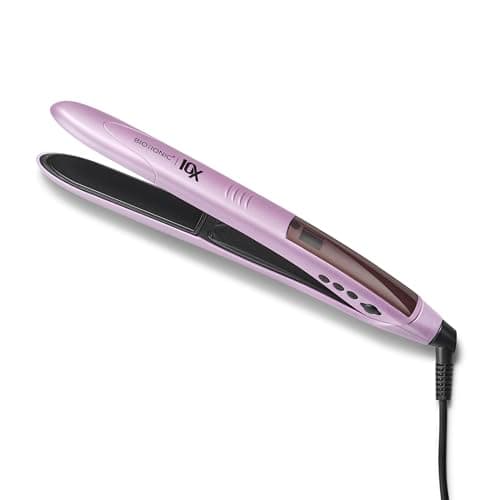
Bio Ionic 10X 1": rounded-tip plates for the hairline
See price on AmazonSee it on Amazon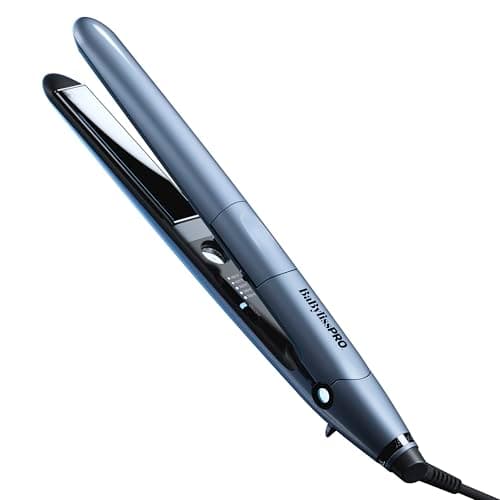
BaBylissPRO TrueTension 1": 465°F, 120V/240V
See price on AmazonSee it on Amazon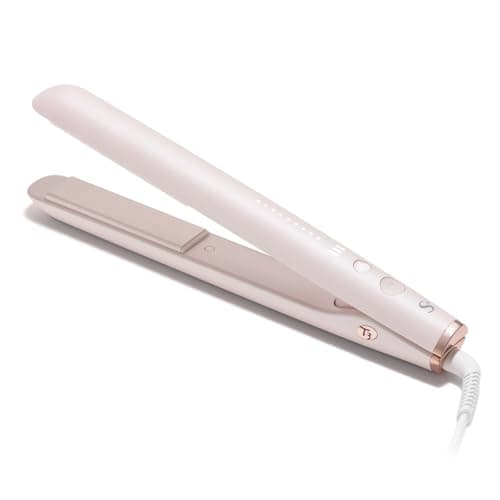
T3 SinglePass StyleMax 1": 9 settings plus Curl Mode
See price on AmazonSee it on Amazon
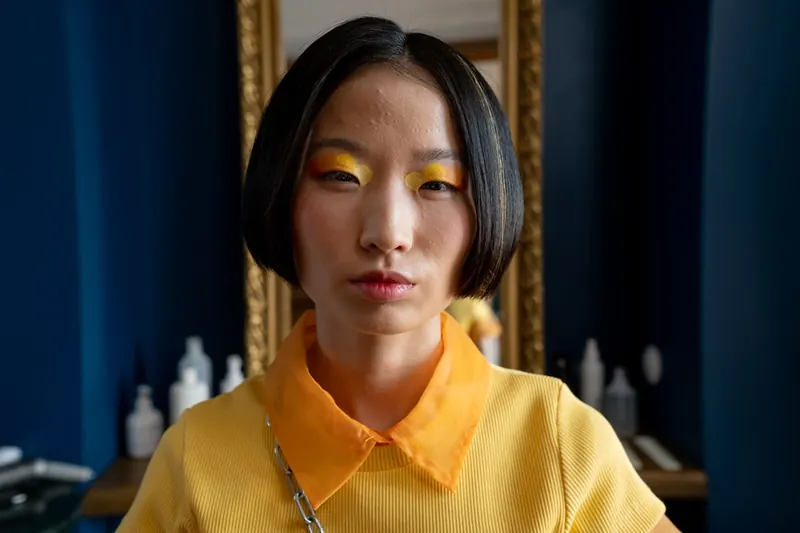
Short hair is harder to flat iron than long hair because there is less length to grip and the iron sits close to the scalp, ears and neck. This guide covers pixie cuts, bobs, lobs and short men's hair. It explains which plate widths work, how to keep volume at the crown, how to straighten bangs and the nape, and how to bend the ends for a finished look. For tool picks, see our flat irons for short hair.
Choose the right plate width
Narrow plates make short hair much easier. A 1/2 inch iron such as the ghd Mini Styler gets close to the root on pixie cuts, around the hairline and on short bangs. A 1 inch iron like the BaBylissPRO Ultra Thin, ghd Platinum+ or T3 SinglePass StyleMax is the usual pick for bobs and chin-length cuts because it still reaches the roots while covering more hair per pass.
Plates wider than 1 1/2 inches can be awkward on hair shorter than the chin. They are hard to angle near the scalp and make it easy to flatten the crown. See the flat iron size guide for more.
1/2 in plate
Pixie and very short
Short hair, bangs, edges and close to the root
1 in plate
Chin length
The all-rounder: straightens and curls most lengths
1 1/2 in plate
Shoulder length
Faster on thicker hair; still workable for waves
2 in plate
Long and thick
Covers long, dense hair in fewer passes; hard to curl with
Pixie, very short men's cuts
- Typical plate width
- About 1/2 inch
- Why
- Gets close to the root and around ears
Short bob, chin length
- Typical plate width
- 1/2 to 1 inch
- Why
- Reaches roots, can bend ends
Lob, collarbone
- Typical plate width
- 1 inch
- Why
- Balance of reach and speed
| Hair length | Typical plate width | Why |
|---|---|---|
| Pixie, very short men's cuts | About 1/2 inch | Gets close to the root and around ears |
| Short bob, chin length | 1/2 to 1 inch | Reaches roots, can bend ends |
| Lob, collarbone | 1 inch | Balance of reach and speed |
Prep and heat for short hair
Start with dry, detangled hair and a heat protectant. Short hair heats through quickly because sections are small, so begin at the low end of your typical range: around 250 to 300°F for fine hair, 300 to 380°F for normal hair and higher only for thick or coarse hair. Our temperature tool shows the ranges. Fixed-heat irons such as ghd stylers run at 365°F, so with those you control the result through speed and section size.
If your cut is short at the back and longer at the front, you can use a lower setting on the shorter, finer nape hair.
Step by step: flat ironing a bob or pixie
- 1
Clip the top half away. Start at the nape with thin, half inch sections.
- 2
For the nape, hold the iron pointing down, clamp close to the root and glide down and slightly away from the neck. Keep the plates off your skin.
- 3
Move up the back. Lift each section straight up from the scalp, clamp near the root, then glide up and out so the root keeps lift.
- 4
At the ends, rotate your wrist a little under (toward the neck) for a smooth, rounded finish, or out for a flicked edge.
- 5
Do the sides with the iron angled toward your face and then away to soften the shape.
- 6
Leave the crown and the top layer for last. Lift them high, glide quickly and avoid pressing them flat against the head.
- 7
Let everything cool, then break it up with your fingers and a small amount of styling product.
Avoiding a flat crown and stiff ends
A flat crown usually comes from clamping the top sections close to the head and pulling them down. Instead, lift each crown section straight up or slightly forward before you clamp, and move the iron up and away. Small, quick passes on the top layer help keep it from looking pressed.
Ends that stick straight out on a bob are often from a perfectly level pass. A slight bend under at the end makes the shape look finished. A flat iron with a rounded outer housing, like the ghd Platinum+ or Bio Ionic 10X, makes this bend easier because the edges are curved.
Bangs and edges
For straight-across bangs, take the whole fringe in one or two thin sections, lift slightly forward, clamp near the root and glide down, rotating a little under at the ends. For side-swept bangs, glide in the direction you want them to fall.
Around the hairline and temples, a narrow iron is safer and more precise. Hold the section away from your skin and keep the iron moving.
Note.Short hair puts the plates close to your forehead, ears and neck. Work slowly near skin, keep the plates pointed away from your face, and consider a heat-resistant glove on your free hand.
Short men's hair
Men with short hair often want to reduce a cowlick or wave rather than get a sleek look. A 1/2 or 1 inch iron at a low setting is usually enough. Take small sections, glide in the direction you want the hair to lie, and use a matte product afterward for a natural look.
For beards, use only tools whose maker says they are meant for beards, and use the lowest effective setting. Facial skin is close to the plates.
Waves and curls on short hair
A 1 inch flat iron can make soft waves on a bob: clamp, turn a half turn away from your face, and glide down slowly. The how to curl hair with a flat iron guide has the full technique. For tighter curls on short hair, a small barrel curling iron often works better; see how to curl short hair and curling irons for short hair.
Frequently asked questions
Can you straighten very short hair? Yes, if there is enough length to fit between the plates. A 1/2 inch iron handles hair down to roughly an inch or two in length. Below that, a brush and blow dryer are usually easier.
Why does my bob look flat after straightening? The top sections were likely clamped down against the head. Lift each crown section up before clamping and glide up and out to keep root lift.
What temperature should I use on short hair? Start low for your hair type, since small sections heat fast. Typical maker guidance is 250 to 300°F for fine hair and 300 to 380°F for normal hair.
Is a mini flat iron worth it? For pixies, edges, bangs and travel, a 1/2 inch iron is very handy. For bobs, a 1 inch iron is often enough on its own.
What you need for this
- See price on AmazonAmazon
Bio Ionic 10X 1": rounded barrel and sonic plates
 See price on AmazonAmazon
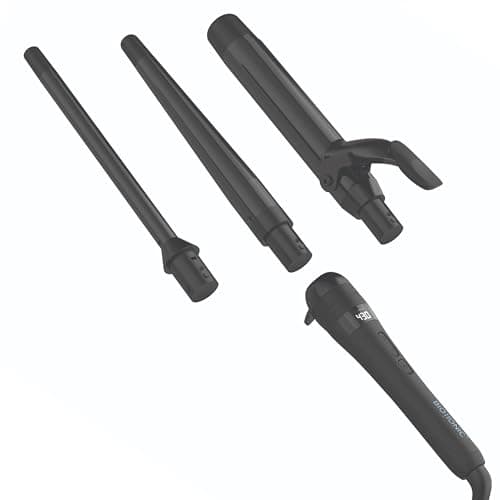
Bio Ionic Twist: 0.5" wand and 1" tapered in one set
From Best curling irons for short hair: small barrels compared